An Epic Homecoming of a Remorseful Warrior
লেখক: মাহমুদ (Mahmud) · ২৪ জুলাই, ২০২৬ · বিভাগ: সিনেমা
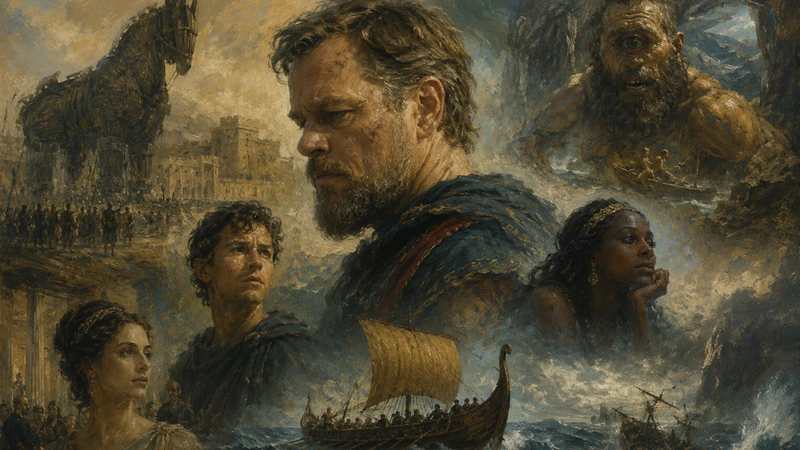
Ultimately, The Odyssey offers audiences a magnificent cinematic experience. Like Nolan's previous works, it is above all a triumph of visual storytelling. The sea, the ships, the beaches, the storms, the Trojan Horse, and the brief yet awe-inspiring glimpses of the Trojan War are all presented with unmistakably epic grandeur.
It little profits that an idle king,
By this still hearth, among these barren crags,
Match'd with an aged wife, I mete and dole
Unequal laws unto a savage race,
That hoard, and sleep, and feed, and know not me.
Tennyson begins his poem Ulysses with these lines. Ulysses is the Latin name for the Greek hero Odysseus, the king of Ithaca. Under Agamemnon's command, he became one of the foremost warriors in the Trojan War. Before leaving for Troy, he told his wife, Penelope, that if he did not return within a certain time, she should marry again. Penelope, however, made him promise that he would come back. Odysseus, too, was determined to return. Yet the journey home proved far more perilous than the war itself. He had to cross countless lands, endure unimaginable disasters, and confront relentless enemies. His became a journey of extraordinary length and hardship. In Homer's telling, that journey is called The Odyssey. Over the centuries, the word odyssey itself has come to signify any long and arduous journey. Drawing upon Homer's epic, Christopher Nolan has now transformed Odysseus's story into cinema. Yet the legendary hero of Homer emerges here as a warrior haunted by remorse.
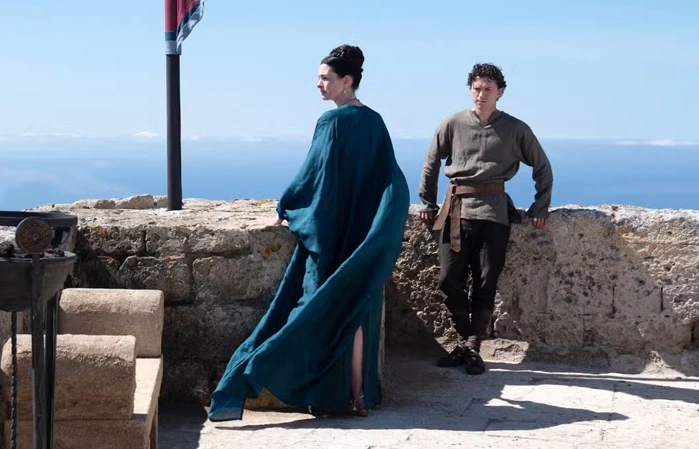
The film opens in Ithaca. Penelope's palace is crowded with suitors seeking her hand. Telemachus, now grown into a young man, can no longer tolerate their presence. His father left for war before he was old enough to remember him. He has heard tales of Odysseus's heroism but he knows little about what truly happened in Troy. The audience (of Nolan's cinema), of course, already knows the story and it gradually unfolds on screen. The palace itself is far from magnificent. Ithaca is no prosperous kingdom.
Yet Penelope's beauty and the promise of the throne have drawn ambitious men who have turned the palace into a place of constant revelry. From his mother, Telemachus learns that it was Odysseus himself who instructed her to remarry if he failed to return. Twenty years have now passed and Telemachus can wait no longer. He sets out in search of his father, traveling from kingdom to kingdom, hoping at least to learn about the man and the war that defined him.
Homer's poem explores these subjects at great length, while adaptations inevitably condense them. Nolan follows the same path. He includes glimpses of the Trojan War, most notably the legendary Trojan Horse and the assault on Troy itself, but his primary focus remains Odysseus's long voyage home.
Then the vast Greek sea fills the screen. There is no extravagant spectacle. Only a narrow warship with a single towering mast and long rows of oars pulled by powerful sailors. As Tom Holland's Telemachus embarks on his voyage, Nolan frames the endless blue sea in breathtaking wide shots, making it seem as though the young prince has launched himself into an infinite ocean with no certainty of where his father might be found.
Christopher Nolan has always enjoyed manipulating time. Flashbacks are central to his storytelling, allowing narratives to shift seamlessly between different periods. The Odyssey is no exception. As Telemachus journeys across the Mediterranean, the film cuts to Odysseus himself, washed ashore on a lonely beach. Beside him is the sea nymph Calypso, who has rescued his life. Through their conversations, Nolan gradually reveals Odysseus's past. His departure for Troy, the horrors of war, the comrades who fought beside him—all emerge in fragmented memories. At times he recalls the battlefield; at others, thoughts of his family surface. Some memories return clearly, while others remain painfully elusive.
In Homer's epic, The Odyssey is defined by the sheer length of its journey. Odysseus spends seven years stranded on Calypso's island alone. Agamemnon's vast Greek army besieges Troy for ten years. After the city's fall, Odysseus spends another three years wandering the seas with his companions. Compressing such an immense narrative into a three-hour film is simply impossible. Nolan therefore chooses to tell the story in fragments. Sometimes Odysseus recounts it through his own memories; sometimes Telemachus hears about his father from Menelaus. Between these narratives, the film repeatedly returns to Ithaca, where conspiracies unfold inside the palace while the people of the kingdom—and especially Odysseus's loyal followers—continue waiting for their absent king.
The story of Odysseus encompasses far more than a single adventure. Like many of the world's great epics, its central narrative branches into countless themes: morality, warfare, politics, society, geography, mythology, prophecy, astronomy, nature, catastrophe, philosophy, and the complexities of human existence. Homer's poem explores these subjects at great length, while adaptations inevitably condense them. Nolan follows the same path. He includes glimpses of the Trojan War, most notably the legendary Trojan Horse and the assault on Troy itself, but his primary focus remains Odysseus's long voyage home. Much of that journey unfolds at sea, and Nolan brings the ocean to astonishing life. When Odysseus's ship is swallowed by a violent storm, the audience feels engulfed by the tempest itself. Later, when the crew is trapped inside the cave of the Cyclops Polyphemus, the tension becomes almost suffocating. Nolan also stages Odysseus's encounter with the Laestrygonians, choreographing every sequence with remarkable precision and scale.
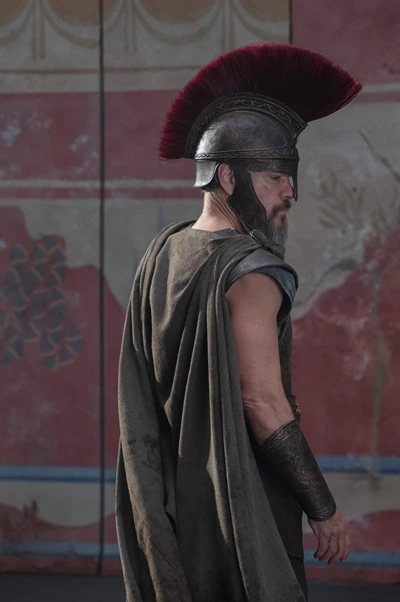
Yet Nolan's greatest departure from Homer lies in his portrayal of Odysseus himself. In the original epic, Odysseus is a proud warrior whose choices are guided by the uncompromising code of heroism. Nolan, however, presents him as a man burdened by regret. As he sits with Calypso trying to piece together his memories, anxiety and sorrow linger across his face. Matt Damon captures this profound weariness with extraordinary subtlety, portraying a warrior nearing the end of his life's journey. Nolan's Odysseus constantly questions himself. He no longer glorifies his victories in battle; instead, he is driven by a determination to honor his promise and by a deep sense of self-awareness.
And then there is Odysseus himself. In every expression, every gesture, and every glance, Matt Damon brings the legendary king to life. Yet he is not Homer's Odysseus. He is Nolan's Odysseus.
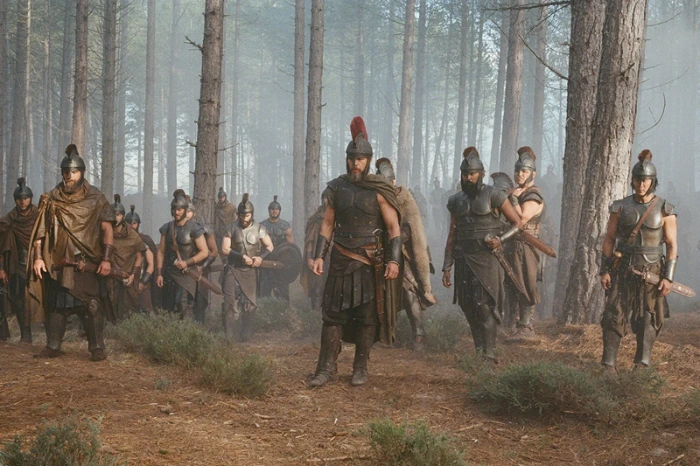
Even before The Odyssey was released, several controversies surrounded the film. The first concerned its use of language, the second the design of its armor, and the third the casting of Black actors. Judged objectively, the language never becomes a significant distraction. The armor designs, however, could have benefited from greater historical refinement, as Nolan's interpretation raises legitimate questions about the appearance of Greek soldiers. The most debated casting choice was Lupita Nyong'o as Helen. Was she an appropriate choice for a character whom Homer described as the most beautiful woman in the world—or, more accurately, within the Greek imagination? Beauty, of course, is open to interpretation. According to conventional understandings of Homer's Greece, Black women did not occupy such a place within its mythology. Yet in truth, Helen serves only a minimal role in Nolan's adaptation, and her limited screen time prevents the casting from becoming a central issue.
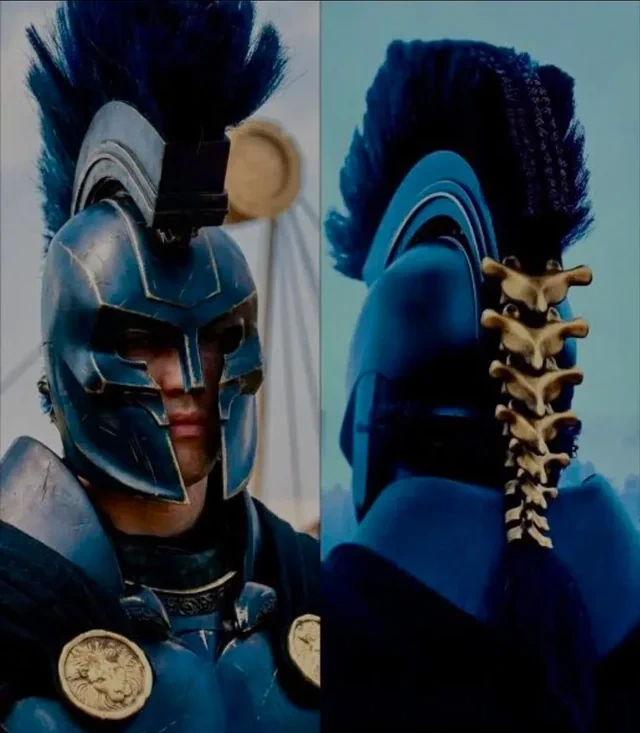
Ultimately, The Odyssey offers audiences a magnificent cinematic experience. Like Nolan's previous works, it is above all a triumph of visual storytelling. The sea, the ships, the beaches, the storms, the Trojan Horse, and the brief yet awe-inspiring glimpses of the Trojan War are all presented with unmistakably epic grandeur. Nolan's greatest strength has always been his vision, and nowhere is that clearer than in this film. Even though Benny Safdie appears only briefly as Agamemnon, his presence sends a chill through the audience. When the gates of Troy finally open and Agamemnon stands before his army, he seems less like a mortal king than a god descending upon the battlefield. Such moments are possible only because of Nolan's extraordinary cinematic imagination.
To realize that vision, the cast delivers performances of remarkable commitment. Matt Damon, Anne Hathaway, Tom Holland, Charlize Theron, and Himesh Patel each give their finest. Hathaway is superb as Penelope, embodying both quiet resilience and enduring hope. Robert Pattinson makes Antinous a convincingly cowardly and manipulative villain. Tom Holland appears to have spent years maturing as an actor precisely for a role like Telemachus. And then there is Odysseus himself. In every expression, every gesture, and every glance, Matt Damon brings the legendary king to life. Yet he is not Homer's Odysseus. He is Nolan's Odysseus.
Perhaps Alfred, Lord Tennyson captured Odysseus most beautifully in Ulysses, placing these words in the hero's mouth: I cannot rest from travel: I will drink life to the lees. There is unmistakable pride in Tennyson's Ulysses. Transform that pride into remorse; and it becomes Christopher Nolan's The Odyssey.
ট্যাগ: #সিনেমা